Anycast Gateway Routing for Multiple Subnets in EVPN-IRB
Overview
In the Ethernet VPN Integrated Routing and Bridging (EVPN-IRB) scenario, any two Layer 2 Virtual Network Identifiers (L2 VNID) nodes communicate using the Routing IP Virtual Routing and Forwarding (VRF). This communication is enriched with Anycast Gateway Routing to accommodate communication among multiple subnets under the IRB interface (per VNID).
In the current implementation, the router’s primary IPv4 or IPv6 address is either Router Media Access Control (MAC) or Anycast MAC, and the secondary IPv4 or IPv6 address is always the Router MAC address. Hence, Anycast MAC support was only for the primary IP with a single subnet.
Additionally, the BGP router cannot establish a connection with the primary IP as it is in Anycast mode, and the TCP connection is possible only with any of the routers, as both the routes have the IP as Anycast.
To overcome this drawback, the feature is enhanced to configure both Router MAC or Anycast MAC for both primary and secondary subnets.
By default, each subnet uses the Router MAC address received from the ARP/ND cache. The anycast argument in evpn irb-if forwarding anycast gateway CLI is used to configure the Anycast MAC for primary or secondary subnets. The argument helps to update the ARP/ND cache with Anycast MAC. This enables the user to use Anycast MAC for multiple subnets under L2 VNID. For example, users can have Subnets A, B, C with Anycast MAC and Subnet D with Router MAC.
Feature Characteristics
This feature enhancement provides the following support:
| • | Enables configuration of either a Router MAC or an Anycast MAC address for primary or secondary subnets. |
| • | Use of Anycast or Routing IP Gateway for multiple subnets under the Layer-2 VNID's. |
| • | Flexibility to have Anycast Gateway for multiple subnets (for example, Subnet A, B, and C) while allowing the other subnet (for example, Subnet D) to be reserved for BGP. |
| • | The InterfaceFull model that provides the flexibility to respond to the ARP/ND requests from the ARP/ND table. |
| • | The InterfaceLess model that use the kernel interface with a unique MAC per interface, either Router MAC or Anycast MAC for all the subnets. |
LIMITATIONS:
In InterfaceLess model, the kernel IRB interface has a single MAC that is either Router MAC or Anycast MAC, however, the response message always has Anycast MAC irrespective of whether the interface’s IP address is Anycast or Router MAC.
Benefits
Allows users to have primary and secondary subnets with either Router MAC or Anycast MAC. This flexibility provides support for Anycast Gateway for multiple subnets under Layer 2 VNIDs.
Topology
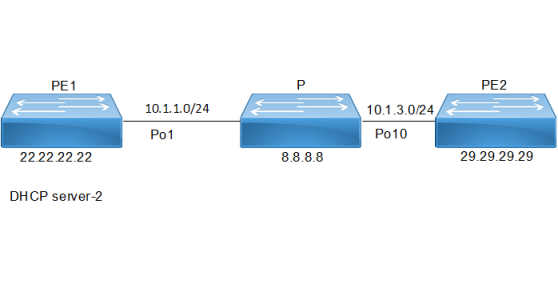
Figure 66. Anycast Gateway support for subnets